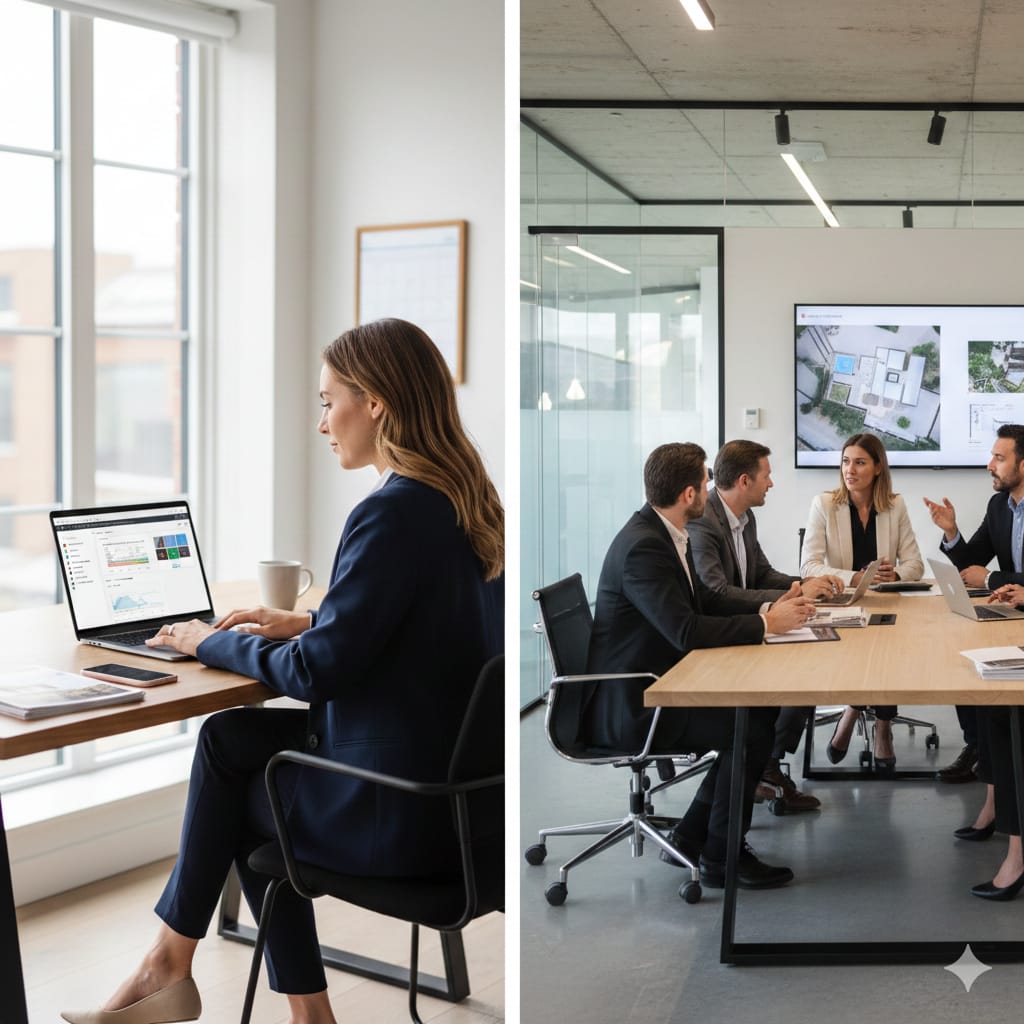
Hybrid Work Models for Real Estate: The Future of Agent Productivity
The real estate industry has always been relationship-driven and field-based. Agents meet clients, visit properties, host open houses, and negotiate deals in person. However, the way real estate teams operate behind the scenes has changed dramatically. Hybrid work models — combining remote flexibility with in-office collaboration — are becoming the new standard for modern brokerages and teams.
What Is a Hybrid Work Model in Real Estate?
A hybrid work model allows agents and support staff to split their time between working remotely and working from a physical office. Instead of requiring full-time office attendance, brokerages create structured flexibility. Agents might handle prospecting, follow-ups, marketing, and administrative tasks from home while coming into the office for team meetings, training sessions, and collaboration days.
For real estate teams focused on growth and scalability, hybrid work offers the best of both worlds: independence and structure.
Why Hybrid Models Are Gaining Popularity
Increased Productivity
Many agents perform better without constant office distractions. Remote days allow focused lead generation, CRM updates, marketing content creation, and contract preparation.
Cost Efficiency
Brokerages can reduce overhead costs by downsizing office space or transitioning to shared workspaces. Savings can be reinvested into marketing, technology, and coaching.
Talent Attraction and Retention
Flexibility is a major factor for modern professionals. Offering hybrid options helps attract ambitious agents who value work-life balance without sacrificing performance.
Technology Makes It Possible
Cloud-based CRMs, transaction management platforms, video conferencing, and e-signature tools make remote collaboration seamless. Teams can track KPIs, monitor pipelines, and communicate effectively from anywhere.
How to Structure a Successful Hybrid Model
A hybrid system must be intentional. Without structure, flexibility can turn into inconsistency.
1. Set Clear Expectations
Define performance metrics. Instead of measuring hours in the office, focus on results: calls made, appointments set, listings secured, and closings completed.
2. Schedule Collaboration Days
Designate specific in-office days for team meetings, training, role-play sessions, and strategy planning. This maintains culture and accountability.
3. Leverage Technology Strategically
Use project management tools for task tracking. Automate follow-ups through CRM systems. Implement shared dashboards so everyone understands team goals.
4. Maintain Strong Communication
Daily check-ins (via Slack, Zoom, or WhatsApp groups) keep everyone aligned. Weekly pipeline reviews ensure deals stay on track.
5. Preserve Company Culture
Hybrid does not mean disconnected. Celebrate wins publicly. Host monthly in-person events. Encourage mentorship between senior and junior agents.
Challenges to Consider
Hybrid work also brings challenges. Some agents may struggle with self-discipline when working remotely. Communication gaps can occur if expectations aren’t clear. Leaders must actively coach, monitor performance, and create accountability systems.
Additionally, onboarding new agents requires structured training programs to ensure they feel supported, even if they aren’t in the office every day.
The Future of Real Estate Teams
The future of real estate belongs to adaptable teams. Hybrid models empower agents to operate like entrepreneurs while benefiting from team collaboration and leadership guidance. Brokerages that embrace flexibility, invest in technology, and prioritize culture will outperform competitors who rely solely on traditional office models.
In today’s market, productivity is not about where you work — it’s about how effectively you use your time. A well-designed hybrid work model creates balance, drives performance, and prepares real estate professionals for long-term success.